China isn’t just spying on No 10! Experts reveal how your smart device could be hiding secret spyware that risks all your data being sent back to Beijing

Shocking claims that China stole Britain’s state secrets using a backdoor into sensitive Whitehall data systems have brought home the threat of foreign espionage.
In a major blunder, the Chinese were allowed to buy a company that controlled a data hub used by government departments to exchange information, including on highly classified projects.
Former No 10 aide Dominic Cummings said on Wednesday that the communist superpower stole ‘vast amounts’ of material. He said this included the ‘most sensitive data’ belonging to the British state, although this was denied by the Cabinet Office.
But has the reach of the Chinese state already extended into a much more personal place – our very own homes?
That’s the verdict of cyber experts and China watchers, who told the Mail that smart devices – from TVs and mobile phones to switches and doorbells – risk giving Beijing access to our own private secrets.
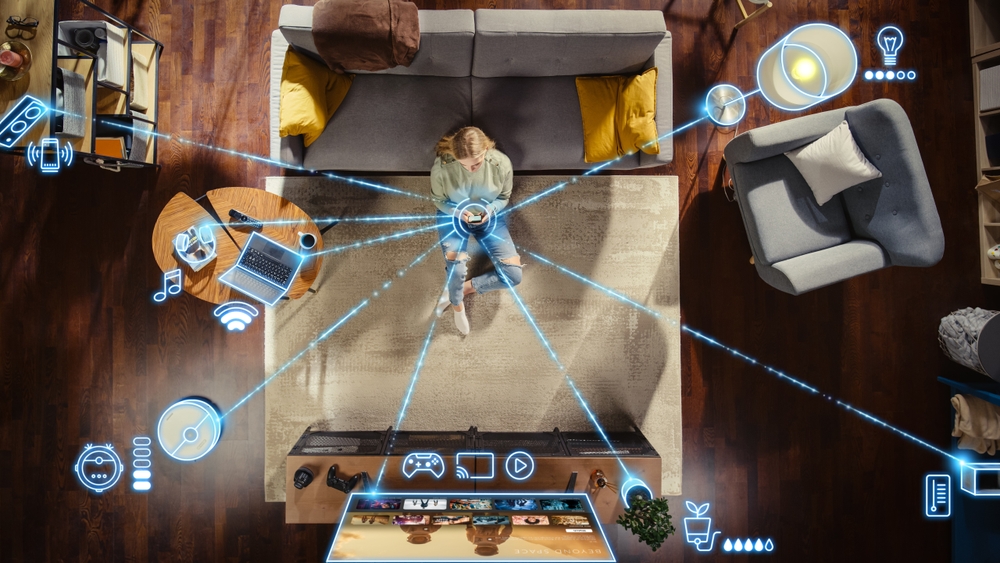
These gadgets operate as part of the so-called Internet of Things (IoT), which share information with each other – and their manufacturers – with limited regulatory oversight.
Ian Reynolds, principal cyber security consultant at SecureTeam Ltd said this left them open to exploitation.
‘When you connect a smart device to your home or office network, it makes a connection back to the manufacturer’s servers to allow the device (like a smart switch or heating controller) to be controlled through a mobile app or a website,’ he said.
‘For the average consumer, it’s not possible to know where in the world your smart device is connecting back to, and in many cases, the manufacturer’s servers may be in a country that the UK Government considers to be a hostile nation (such as Russia, China or North Korea).
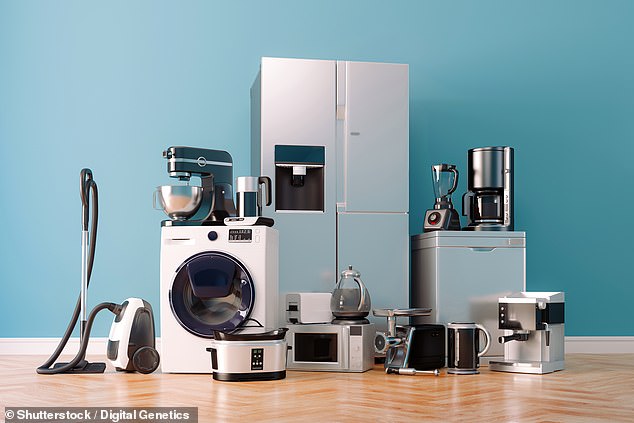
Smart devices – from TVs and mobile phones to switches and doorbells – risk giving Beijing access to our own private secrets, experts warn
‘If there is malicious code inside that smart device – whether planted in by the manufacturer or by a foreign intelligence service – then it could allow an adversary to gain remote access into the network on which you’ve installed the smart device.
‘There’s a risk that the device could not only be controlling your lights or heating, but also allowing a malicious individual to gather sensitive information (like Wi-Fi passwords) or to use the smart device as a method of launching attacks into other vulnerable devices on that network for the purposes of hacking into them.’
Devices like smart speakers are designed to be constantly listening for human commands, while some smart TVs have built-in cameras for tasks like video calls.
Asked if it was possible for these gadgets to be used to collect audio or video of their users by a hostile actor, Mr Reynolds said: ‘Quite possibly.
‘If this remote access functionality has already been built into the firmware on the device or if a software ‘backdoor’ has been introduced by a malicious individual.’
‘When someone installs a camera in their house there’s a chance it could be used to gather images or video.
‘Users can reduce this risk by choosing strong passwords for the camera’s web interface and by always making sure that the latest firmware has been installed from the manufacturer…..providing you trust the manufacturer of course.’
The cyber expert said there was a higher risk for smart items used in China due to the requirement for Chinese companies to allow a level of access to the authorities in Beijing.
But he added: ‘It’s not limited to China. The same could be said for other countries like North Korea and Russia.
‘Any countries that wish to spy on UK consumers or businesses could potentially be conducting spying operations through compromised smart devices.’
Alicia Kearns, the Tory MP who was one of the targets of the alleged spying operation involving her former aide, Chris Cash, warned of smart devices being ‘weaponised’ by China.
‘Doorbells, security cameras, payment machines, cars – anything that can be controlled through an app is a risk,’ she told the Mail.
‘China has recognised that these devices provide a significant opening for them that allows them to harvest a significant amount of data that could be used for blackmail.
‘And any smart device in your home is listening to you all the time, so that could be incredibly useful to somebody too.
‘We haven’t woken up as a country or a public to these risks. People shouldn’t just buy the cheapest thing as that will often be made in China.’

Devices like smart TVs are designed to listen out for your commands. File photo

Dominic Cummings said on Wednesday that China stole ‘vast amounts’ of material using a backdoor into sensitive Whitehall data systems
The CPS dropped the case against Cash and a second man, Christopher Berry, in September after deeming the evidence did not show China was a threat to national security.
Both men, who deny wrongdoing, had been accused of passing secrets to China.
Prosecutors said the case had been abandoned because evidence could not be obtained from the government referring to China as a national security threat – sparking a huge political row.
Mike Wills is a cyber security expert who has just launched Be Hard to Hack, a platform giving families tips on staying safe online.
He urged Brits to behave carefully around devices like smart speakers.
‘We know how to keep ourselves safe in the physical world, so we need to have that same approach with the digital world,’ he said.
‘We know smart devices are passively listening to be able to react to us.
‘If you’re having a private conversation, you would adjust the way to talk to someone in the presence of the other people, so you need to have that same awareness with smart speakers.
‘We don’t know for certain that someone is listening, but it’s good to have a healthy scepticism.’
Beijing is known to monitor the lives of its own citizens through electronic goods connected to the internet, such as TVs and smartphones.
Kayla Blomquist, director of the research institute Oxford China Policy Lab, previously warned that data harvested from British homes could be used by communist officials for influence operations and ‘sophisticated online disinformation campaigns’.
Thomas Balogun, a chartered security professional, said the Internet of Things had been established with a minimal ‘compliance framework’ and called for this to be strengthened.
‘Given that IoT devices – such as surveillance cameras, sensors, and communication tools – may be exploited as digital entry points, their secure configuration is of critical importance,’ he said.